Many homeowners rarely think about their dryer vent, but this often-overlooked system plays an important role in both home safety and energy efficiency.
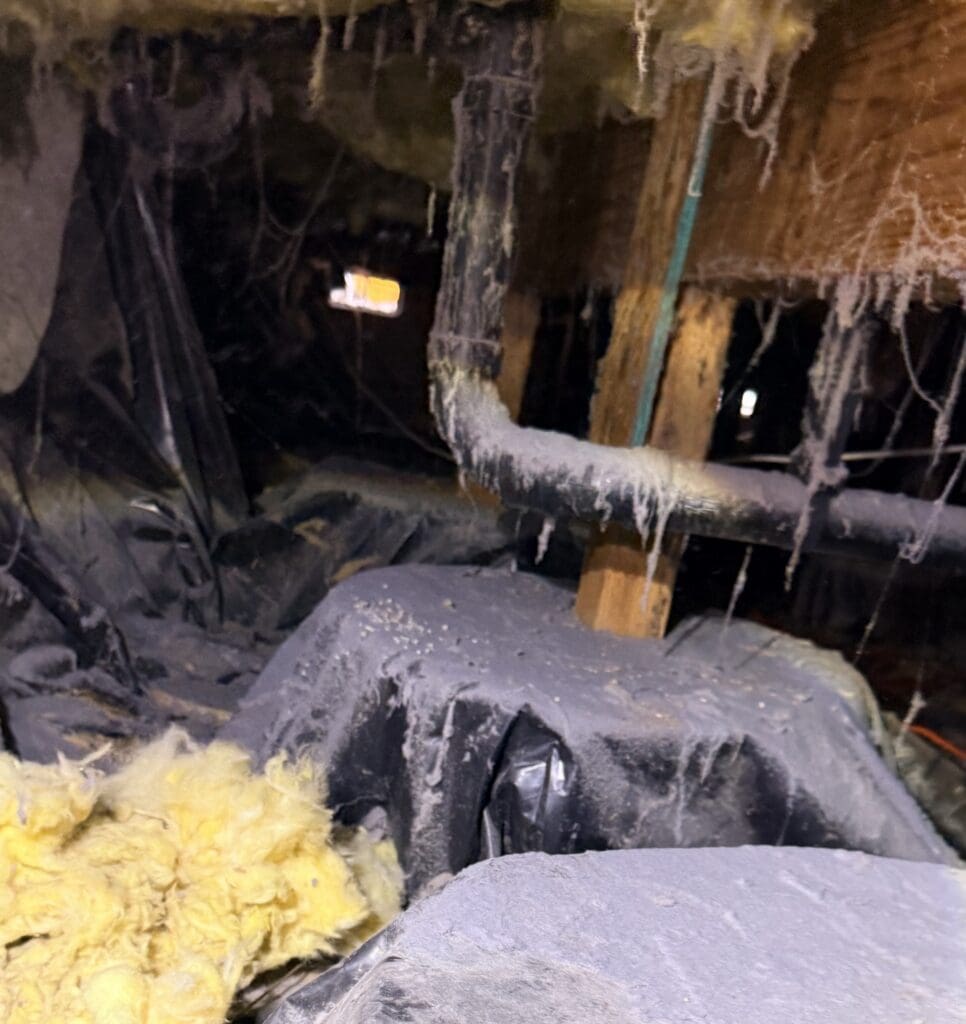
During crawlspace inspections, one issue we occasionally encounter is a disconnected or improperly routed dryer vent that is exhausting directly into the crawlspace.
While it may seem harmless, a dryer vent releasing air into your crawlspace can create serious problems ranging from fire hazards to moisture damage.
The Hidden Danger of Dryer Lint
Every time you run your dryer, tiny fibers from clothing are carried through the vent system. When the dryer vent becomes disconnected or damaged, that lint doesn’t make it outdoors. Instead, it accumulates throughout the crawlspace.
Lint is highly combustible. Over time, significant lint buildup can create a potential fire hazard, especially if it comes into contact with heat sources or electrical components. According to fire safety experts, dryer-related fires are often linked to lint accumulation and improper venting practices.
How Dryer Exhaust Moisture Damages Your Crawlspace
Beyond lint, every load of laundry drives significant moisture into the air stream. A standard residential dryer can expel up to a pint of water per load into the exhaust airflow.
When that moisture-saturated air enters an enclosed crawlspace, it condenses on cooler surfaces — wood, concrete, insulation, and metal — creating conditions ideal for:
Wood Rot and Structural Damage
Elevated moisture levels promote fungal growth on wood framing. Over time, this can lead to soft spots in the subfloor, sagging joists, and — in severe cases — structural compromise that requires sistering or full joist replacement. Wood rot remediation typically costs $500–$5,000+ depending on the extent of damage.
Mold and Mildew Growth
Mold thrives when relative humidity exceeds 60%. A disconnected dryer vent can push crawlspace humidity well above that threshold. Mold colonies that develop on joists and insulation can spread to wall cavities and floor systems, creating a persistent indoor air quality problem that requires professional remediation.
Insulation Degradation
Fiberglass batt insulation absorbs moisture and loses R-value when wet. Saturated insulation can also become a medium for mold growth, eventually requiring complete removal and replacement.
The Stack Effect and Indoor Air Quality
Crawlspaces are not isolated from your living space. Warm air rises through a home — a phenomenon called the stack effect — drawing air upward from the crawlspace through gaps in the floor assembly. Moisture, mold spores, lint particles, and musty odors from the crawlspace can migrate directly into rooms above, affecting the air your family breathes every day.
Warning Signs of a Dryer Vent Problem
Homeowners may not realize their dryer vent has become disconnected. Some common signs include:
- Clothes taking longer than normal to dry
- Increased humidity in the home
- Musty odors coming from floors or crawlspace access points
- Visible lint accumulation in the crawlspace
- Higher energy bills due to reduced dryer efficiency
If you notice any of these symptoms, it’s worth having your dryer vent inspected.
Proper Dryer Venting Matters
Building codes are designed to ensure dryer exhaust is safely directed outside the home. A properly installed dryer vent helps:
- Reduce fire risks
- Prevent moisture buildup
- Improve dryer performance
- Extend the lifespan of your appliance
- Protect your crawlspace and structural components
The vent system should be securely connected, properly supported, and terminated at an approved exterior location.
What We Look for During Crawlspace Inspections
As part of our crawlspace inspections, we check for signs of disconnected, damaged, or improperly routed dryer vents. If we discover an issue, we can recommend and install solutions that help bring the venting system into compliance and ensure the dryer exhaust is directed safely outside the home.
Correcting a dryer vent issue is often a relatively simple improvement that can help protect your home from costly damage and reduce potential safety concerns.
How a Disconnected Dryer Vent Is Corrected
Repairing a dryer vent that’s exhausting into the crawlspace is typically one of the more straightforward crawlspace corrections — especially when caught early.
Common solutions include:
- Reconnecting the duct – If the duct simply separated at a joint, reconnecting and securing it with foil tape (not standard duct tape) may resolve the issue
- Rerouting the duct – If the original installation was improper or the run is too long, the duct may need to be re-routed to reach an approved exterior termination point
- Replacing deteriorated ductwork – Older flexible plastic duct should be replaced with rigid or semi-rigid metal duct per current code
- Installing an exterior vent cap – If the exterior termination is missing or damaged, a new weatherproof hood must be installed
- Addressing secondary damage – Lint removal, mold remediation, insulation replacement, or structural repairs may be necessary depending on how long the issue went unaddressed
Protect Your Home: Start With a Crawlspace Inspection
A crawlspace may be the least-visited part of your home, but the conditions inside directly affect your home’s structural integrity, energy efficiency, and the air quality in every room above it.
A disconnected or improperly routed dryer vent is one of the most common — and preventable — issues found during crawlspace inspections. Catching it early means a simple repair. Left unaddressed, it means mold remediation, structural repairs, and potential fire risk.
If you haven’t had your crawlspace professionally inspected recently, now is the right time. A qualified crawlspace inspector can assess your dryer vent, evaluate moisture conditions, and give you a clear picture of what’s happening beneath your home.
Frequently Asked Questions
Can I inspect my own dryer vent?
You can check the exterior vent cap to confirm it opens when the dryer runs. However, the section of duct running through the crawlspace requires physical inspection in the crawlspace itself. Without proper equipment and knowledge of what to look for, DIY inspection often misses partial disconnections or areas of lint accumulation deep in the duct run.
How often should dryer vents be cleaned?
The NFPA recommends cleaning the dryer vent at least once per year. Homes with large families, pets that shed, or high laundry volume may need more frequent cleaning.
Is a disconnected dryer vent covered by homeowner’s insurance?
Typically no — maintenance-related damage is usually excluded. However, if the improperly vented dryer caused a fire or water damage, coverage may depend on the specifics of your policy and the circumstances of the claim.
What’s the difference between a dryer vent and a dryer duct?
These terms are often used interchangeably. The “duct” refers to the physical pipe or tube, while the “vent” can refer to the entire system including the exterior termination point.
