
When a Springfield, Oregon homeowner contacted Josh Lowe’s Dr. Energy Saver about persistently cold floors and rising energy bills, they were dealing with a problem common to many Oregon homes—an uninsulated, poorly sealed crawl space that was literally draining energy and comfort from their home.
The Problem: Cold Floors and Energy Loss
This Springfield home was experiencing classic crawl space insulation failure:
Comfort Issues:
- Cold floors year-round, especially in winter
- Drafts coming up through floor registers
- Difficulty maintaining comfortable temperatures
- HVAC system running constantly
Energy & Moisture Concerns:
- Energy bills 25-30% higher than similar homes
- Musty odors occasionally entering living spaces
- Concerns about moisture and potential mold growth
- Visible condensation on crawl space surfaces during cold weather
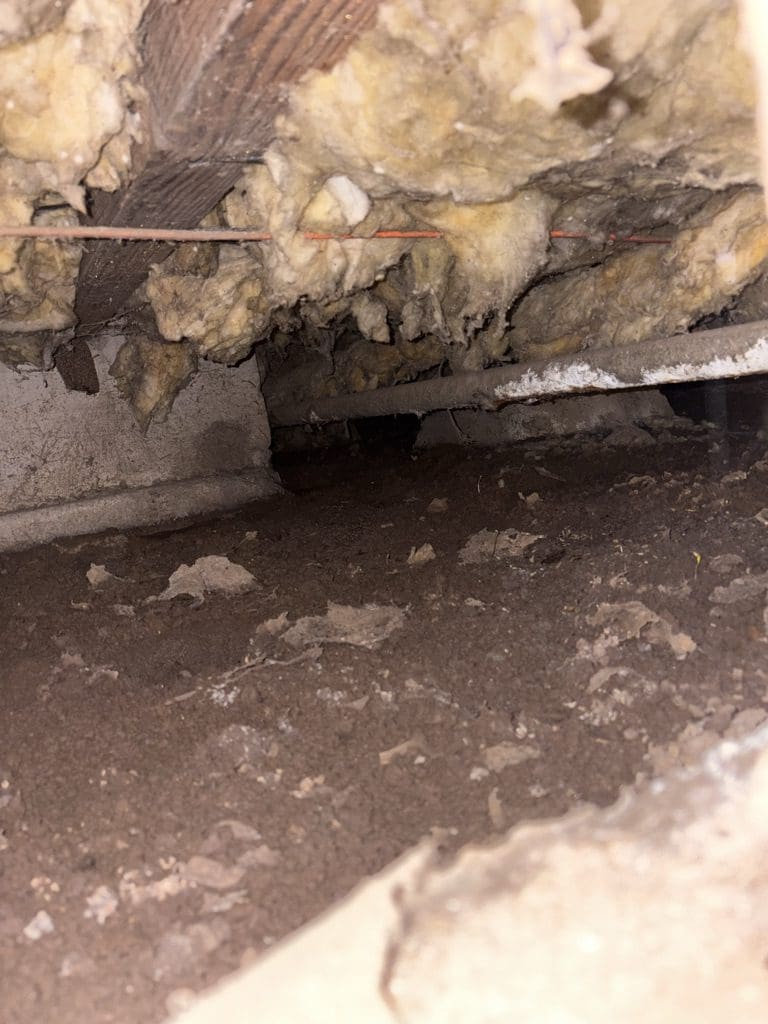
What We Found: Crawl Space Assessment
Our crawl space specialists conducted a thorough inspection and discovered:
Insulation Problems:
- No insulation on crawl space walls or rim joists
- Old fiberglass insulation hanging from floor joists—wet, compressed, and ineffective
- Major air leaks around rim joist areas allowing cold air infiltration
Moisture Issues:
- Inadequate vapor barrier with gaps and tears
- High humidity levels in crawl space
- Damp conditions creating potential for mold growth
Air Leakage:
- Unsealed rim joists creating direct connection to outside air
- Gaps around plumbing and electrical penetrations
- Open vents allowing humid outside air to enter
The combination of poor insulation, air leaks, and moisture made this crawl space a major source of energy loss and discomfort.
After our thorough assessment, we developed a complete crawl space solution to address the moisture damage, contamination, and insulation failures plaguing this Springfield home.
First: Crawl Space Remediation
The first critical step was removing all the compromised insulation from the crawl space ceiling. The existing fiberglass insulation had been severely damaged by rodent activity and water infiltration over time. Rodents had tunneled through the material, leaving droppings and urine throughout the insulation, creating both a health concern and a complete loss of thermal effectiveness. The insulation was also hanging down from the floor joists, having absorbed moisture from the ground below, which caused it to lose its R-value and become a breeding ground for potential mold growth.
Our crew carefully removed all 992 square feet of this contaminated, damaged insulation from the crawl space ceiling. This wasn’t simply a matter of pulling down material, but it required methodical removal to avoid disturbing contaminants and proper disposal of all affected insulation.
Next: Air Sealing & Spray Foam Insulation Installation
With the crawl space properly prepared, we moved forward with our comprehensive air sealing and insulation strategy using closed-cell spray foam. We began by installing a new 6-mil black visqueen vapor barrier across the entire ground surface of the crawl space. Unlike the inadequate or damaged barrier that may have existed before, this fresh vapor barrier was properly staked to the ground to prevent any shifting or movement, creating a reliable moisture barrier between the earth and the crawl space environment.
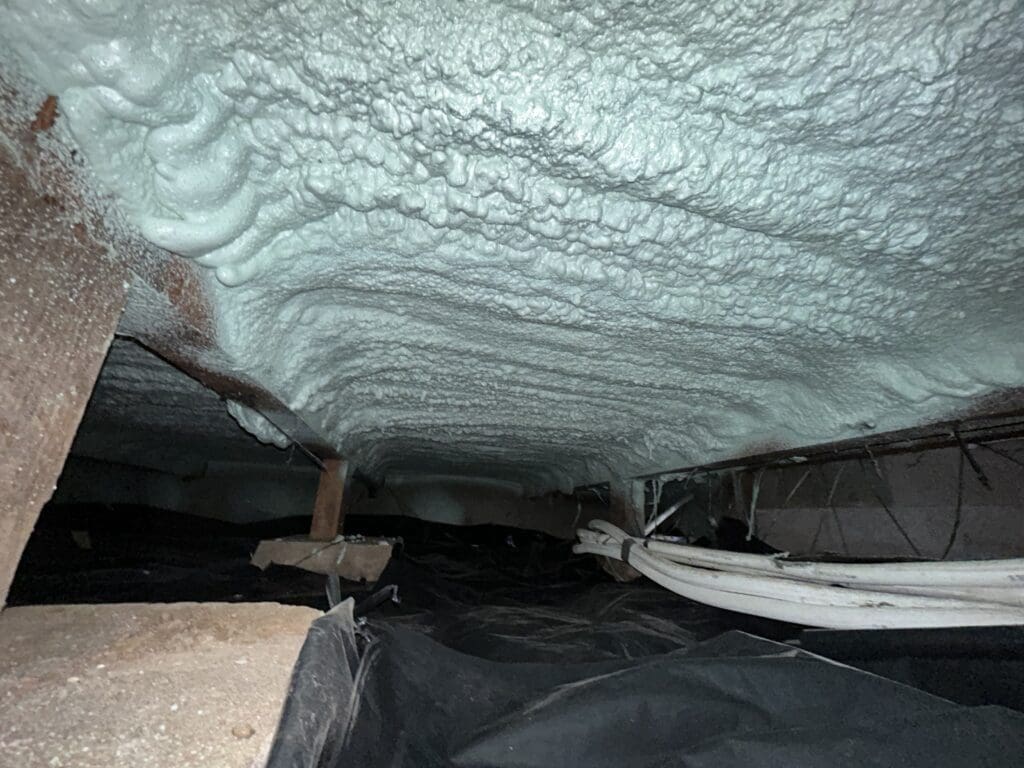
Next came the spray foam application to the crawl space floor system- the area where we’d just removed the failing fiberglass insulation. We applied expanding closed-cell spray foam insulation throughout the entire 992 square feet of crawl space ceiling, which is actually the underside of your home’s floor. This application method offers multiple advantages: the spray foam expands to fill every gap, crack, and irregular space between floor joists, around rim joists, and throughout the complex geometry of the floor framing. It creates a seamless air barrier that completely eliminates the drafts and air infiltration that were making the floors cold, while simultaneously providing superior thermal insulation that doesn’t sag, settle, or lose effectiveness over time like the fiberglass it replaced.
As part of this comprehensive treatment, we also addressed all the exposed plumbing in the crawl space. Every hot and cold water pipe was wrapped with pipe noodle foam insulation, protecting your plumbing from temperature extremes and preventing heat loss from hot water lines. This not only improves energy efficiency but also eliminates any risk of frozen pipes during cold winter weather—a common concern in crawl spaces that aren’t properly insulated and sealed.
The spray foam application to the floor system creates what’s known as an “unvented conditioned crawl space”—bringing the crawl space into the thermal envelope of your home rather than treating it as an outside space. This modern approach, backed by building science research, provides superior performance compared to the old method of insulating between floor joists with fiberglass batts. By sealing and insulating the floor structure, we’ve eliminated cold floors, reduced energy loss, prevented moisture-related issues, and created a space that will protect your home’s foundation and mechanical systems for decades to come!
